When setting up a laboratory workspace, one of the most critical and often overlooked components is the seating. Selecting the right lab stool can significantly impact both comfort and productivity, making it essential to consider factors like height, footring, and backrest. Understanding how these elements affect daily tasks and ergonomic needs is crucial for laboratory managers, researchers, and procurement teams. This guide will delve into these considerations, providing a comprehensive framework for choosing the best lab stool for your workspace.
Understanding Lab Stool Height: How to Measure and Select
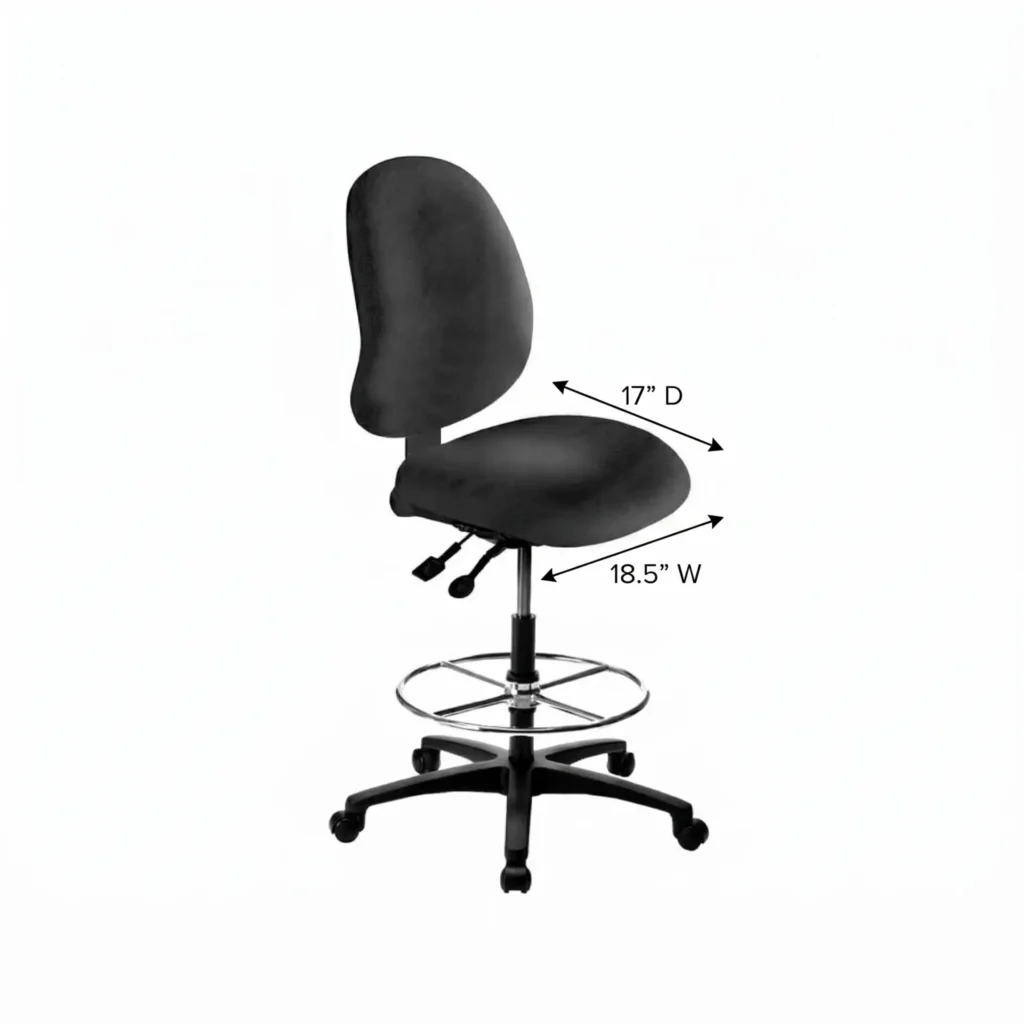
The height of a lab stool is a fundamental aspect that influences the user’s comfort and efficiency. Unlike office chairs, which are typically used at standard desk heights, lab stools must accommodate a range of work surfaces, from benches to fume hoods. To select the correct height, consider the following:
- Measure the Work Surface Height: Begin by determining the height of your primary work surface. This could be a laboratory bench or a specialized workstation.
- User Height and Leg Length: Consider the height and leg length of the primary users. A stool that is too high or too low can cause discomfort and affect posture.
- Adjustability: Look for stools with adjustable height ranges to accommodate different users and tasks. Many ergonomic lab stools offer pneumatic lift systems for easy adjustments.
For more insights on choosing the right office chair dimensions and height range, explore our detailed guide on selecting the right office chair.
The Importance of the Footring: Supporting Comfort and Posture
A footring is an often underestimated feature that plays a pivotal role in maintaining proper posture, especially when working at higher benches. Here’s why the footring matters:
- Leg Support: A footring provides a place to rest your feet, reducing strain on the lower back and legs. This is essential for users who need to sit for extended periods.
- Posture Improvement: By allowing the feet to rest flat, a footring helps maintain a neutral spine position, which can reduce fatigue.
- Adjustability: Ensure that the footring is adjustable to fit the leg length of different users, maximizing comfort and support.
For those uncertain about whether they need additional foot support, our article on office footrests offers valuable insights into workstation ergonomics.
Backrest Considerations: Enhancing Comfort and Support
The presence of a backrest in a lab stool can make a significant difference in user comfort and posture support. Here are some key factors to consider:
- Back Support: A backrest provides essential lumbar support, helping to maintain the natural curve of the spine and reduce discomfort during prolonged tasks.
- Adjustability: Look for stools with adjustable backrests that can be tilted or moved up and down to suit the user’s back contour.
- Task-Specific Needs: Consider the type of tasks being performed. For instance, tasks requiring high precision might benefit from a stool with a minimal or no backrest to allow greater mobility.
Comparing lab stool options with and without backrests can help determine the best fit for your specific needs. For a detailed comparison, read our post on lab stools versus lab chairs.
Considering Task and Equipment Compatibility
The right lab stool must not only fit the user but also the tasks and equipment involved. Here are some considerations:
- Task Duration: For tasks that require sitting for long periods, prioritize stools with enhanced comfort features like padded seats and adjustable backrests.
- Microscope and Pipetting Work: These tasks often require precise movements and good posture. A stool with a stable base and supportive features can enhance performance and reduce strain.
- Compatibility with Lab Equipment: Ensure the stool height and adjustability are compatible with equipment such as biosafety cabinets and fume hoods to maintain an ergonomic working posture.
Understanding your task requirements is key. Our blog offers a wealth of information on choosing the right ergonomic equipment for various tasks.
Materials, Durability, and Cleanability
In laboratory environments, the material and durability of lab stools are crucial, particularly for cleanability and chemical resistance. Consider the following:
- Material Compatibility: Choose materials that are resistant to chemicals and easy to clean, such as vinyl or polyurethane.
- Durability: Labs require durable seating solutions that can withstand frequent use and harsh conditions.
- Maintenance: Select stools that are easy to maintain, ensuring they remain hygienic and functional over time.
Active Ergonomics® offers a range of durable and cleanable lab seating options that meet these requirements, ensuring long-term usability and compliance with laboratory standards.
Conclusion
Choosing the right lab stool involves a careful consideration of height, footring, and backrest features, all tailored to the specific needs of your laboratory tasks and environment. Active Ergonomics® provides a comprehensive selection of ergonomic lab stools designed to enhance comfort and productivity. By understanding these key elements and how they interact with your workspace, you can make an informed choice that supports your team’s efficiency and well-being. Explore our product selection or reach out for personalized assistance to find the perfect lab stool for your needs.