
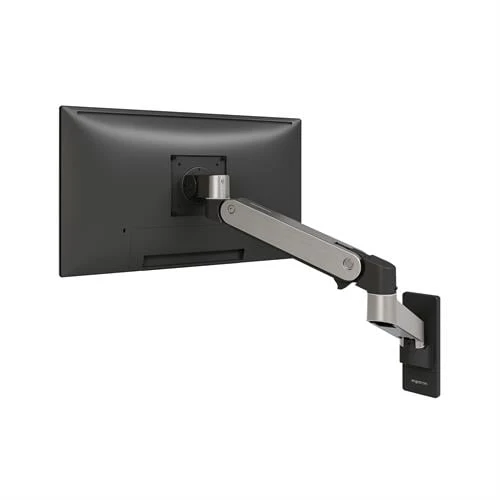
Monitor Arm Compatibility: Single vs. Dual Monitor Arms Explained
Discover the key differences between single and dual monitor arms, including mounting options, weight capacities, and ergonomic benefits.

Choosing between a lab stool and a lab chair may seem straightforward, but the right answer depends on more than whether the seat has a backrest. Laboratory seating must fit the user, reach the work surface, support the task, tolerate the environment, and allow safe movement around specialized equipment.
A low office chair may not reach an elevated laboratory bench. A tall stool may provide the necessary height but lack the support needed for extended microscope or computer work. Seating that works well in a research laboratory may also have materials that are inappropriate for a healthcare, cleanroom, or chemical environment.
Active Ergonomics® has worked in office, laboratory, healthcare, and technical environments since 1997. Using knowledge developed through more than 8,000 professional ergonomic assessments, ActErgo selects laboratory seating based on real task demands and body dimensions—not simply whether a product is called a chair or stool.
Understanding the practical differences between lab stools and lab chairs can help you choose the better option for your workspace.
A lab stool is generally a taller, more compact seating option designed for use at elevated work surfaces. Many models include an adjustable seat, backrest, footring, and casters or glides.
The term “stool” can be misleading because modern ergonomic lab stools may provide significantly more support and adjustability than a basic backless stool. Some resemble compact task chairs installed on taller cylinders, allowing users to work at laboratory benches while receiving support from a backrest.
Lab stools are often useful for:
Their smaller size can make movement easier, but the specific design matters. A stool without an appropriate backrest, foot support, or adjustment range may not be suitable for extended work.
A lab chair typically provides more substantial seated support. Depending on the model, it may include a larger backrest, deeper seat, adjustable armrests, lumbar support, recline features, and controls similar to those found on an ergonomic office chair.
Lab chairs may be designed at standard desk height or configured with a taller cylinder for elevated work surfaces. This makes it important to review actual product specifications rather than relying on the name alone.
A laboratory chair may be preferable for:
The larger backrest and seat may provide more support, but a full-sized chair can also take up more space and interfere with access to benches, cabinets, or equipment.
Manufacturers do not always use “lab chair” and “lab stool” consistently. A product labeled as a stool may include a backrest and several ergonomic adjustments. A product described as a chair may have a taller seat-height range and footring typically associated with stools.
Instead of making the decision based on terminology, compare:
Active Ergonomics® offers laboratory stools in multiple sizes for small or petite, regular, large or tall, and above-average body types. Matching the product specifications to the employee and work area is more useful than relying on a general seating label.
Bench height is one of the most important factors in selecting laboratory seating. Many lab surfaces are higher than standard office desks, particularly when equipment must remain at a fixed elevation or employees alternate between sitting and standing.
The seat must rise high enough to position the employee’s arms comfortably for the task. If the seat is too low, the employee may elevate the shoulders, reach upward, or work with the arms unsupported. If the seat is too high, the employee may lean down toward the surface or experience inadequate leg clearance.
Measure the height of the work surface and determine whether the task is performed directly on the bench, inside an enclosure, or through the viewing area of specialized equipment. A fume hood or biosafety cabinet may impose fixed boundaries that affect how close the employee can sit.
The Active Ergonomics® laboratory solutions are designed around elevated benches, precision work, scientific equipment, and other conditions that conventional office furniture may not accommodate.
Task duration helps determine how much support the seat should provide.
A compact lab stool may be appropriate for brief tasks when the employee frequently stands, moves, or changes stations. A larger lab chair may be more appropriate when the employee remains seated for long periods performing documentation, computer work, microscopy, or detailed analysis.
However, duration should not be considered independently from posture. A supportive backrest has limited value if the employee must lean forward throughout the task. Similarly, a large seat may feel comfortable initially but interfere with the employee’s ability to approach the bench.
For extended work, consider whether the seating provides:
The goal is to support the employee while still allowing movement. Neither a stool nor a chair should force the user to maintain one rigid posture.
When laboratory seating is elevated, the employee’s feet may no longer reach the floor. Without support, the legs may dangle, and the front edge of the seat may create pressure beneath the thighs.
Many taller lab stools and chairs include a footring. The footring should be positioned so the employee can rest the feet without excessively raising the knees or placing the legs in an awkward position.
The footring must also be easy to reach. A petite employee may struggle to use a fixed ring positioned too low, while a tall employee may find that a high footring crowds the legs.
In some workspaces, an independent footrest attached to the bench or placed on the floor may provide better support. Active Ergonomics® considers foot support together with seat height, work-surface height, leg clearance, and body dimensions.
Different tasks place different demands on seating.
Microscope work often requires visual precision and a relatively stable position. The employee must approach the equipment closely while minimizing unnecessary bending of the neck and upper back. A chair or stool with appropriate height adjustment and useful back support may help, provided the seat does not prevent close access.
ActErgo’s guide to microscope posture explains how seating height, equipment placement, forearm support, and eyepiece position work together.
Pipetting frequently involves repetition, precision, and reaching for samples or supplies. A compact stool may allow easier access to the bench, but the user still needs appropriate height, foot support, and room to move.
The seating should complement the workstation arrangement described in ActErgo’s pipetting posture guidance.
Laboratory employees increasingly use computers for documentation, instrument control, and data review. If computer work represents a large portion of the job, a more supportive chair may be beneficial.
Monitor placement and input-device access must also be considered. Adding a larger chair will not resolve a setup that forces the employee to twist between the experiment and computer.
These environments may restrict legroom, limit how closely the user can approach, and create fixed viewing or reaching distances. A smaller stool can sometimes improve access, but the correct choice depends on the enclosure and task.
The presence of a backrest does not automatically make one option more ergonomic. Its height, width, contour, and adjustability determine whether it supports the employee.
A compact backrest may provide useful lower-back support while allowing upper-body movement. A larger backrest may be preferable for extended seated tasks but could restrict access when the user needs to rotate, reach, or work close to equipment.
Ask whether the employee can:
If the task consistently requires the employee to leave the backrest, workstation placement may be more important than simply choosing a larger chair.
Laboratory seating must be appropriate for the substances, procedures, and cleaning methods used in the space.
Fabric that works in an office may absorb spills or be difficult to disinfect. Vinyl, polyurethane, and other nonporous materials may be easier to clean, but each material has different durability and chemical-resistance characteristics.
Depending on the environment, buyers may also need to consider:
Do not assume that every product marketed as laboratory seating is suitable for every lab. Confirm material compatibility with the facility’s requirements before purchasing.
Mobility is another meaningful difference between laboratory seating configurations.
Casters allow employees to reposition themselves and move between nearby tasks. However, the wrong casters may roll too freely on hard flooring or fail to move effectively on another surface.
Glides create a more stationary base. They may be preferable when stability is especially important or when the employee should not roll while performing a precise task. However, employees may then push, pull, or twist the seat to reposition it.
The correct choice depends on flooring, task demands, movement patterns, and facility requirements. A five-point base should also fit beneath and around the workstation without interfering with equipment or creating unnecessary obstacles.
One stool or chair may not fit every laboratory employee. Seat width, seat depth, backrest placement, footring height, and cylinder range should all be considered.
A petite user may need a shallower seat, smaller backrest, and lower foot-support position. A tall or larger employee may need greater seat dimensions, a different height range, and more space between the armrests.
This becomes especially important at shared stations. The seating should offer sufficient adjustability for the expected user population, with alternative sizes available when one range cannot accommodate everyone.
A lab stool may be better when the workstation is elevated, space is limited, the user changes position frequently, or the task requires close access and mobility.
A lab chair may be better when the employee performs longer seated tasks, needs more substantial back support, or spends significant time working at a computer or microscope.
In many facilities, the best answer is not choosing one style for every station. Different tasks and employee dimensions may require several seating configurations.
The best laboratory seating should fit the employee, reach the work surface, support the task, tolerate the environment, and allow appropriate movement. Whether the product is called a stool or chair is less important than what it actually provides.
Active Ergonomics® combines decades of laboratory ergonomics experience with product knowledge developed through thousands of real workplace evaluations. Explore ActErgo’s laboratory seating and workstation products or contact Active Ergonomics® for help choosing a lab stool or chair for your employees and workspace.
Discover the key differences between single and dual monitor arms, including mounting options, weight capacities, and ergonomic benefits.
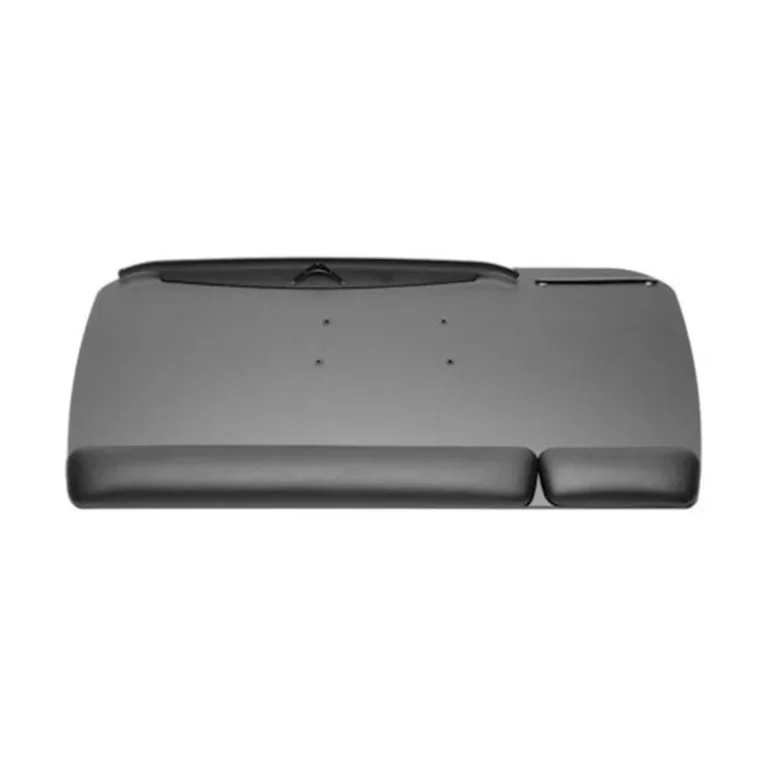
Discover the benefits of adjustable keyboard trays and how they can enhance ergonomic posture and reduce strain in office workstations.
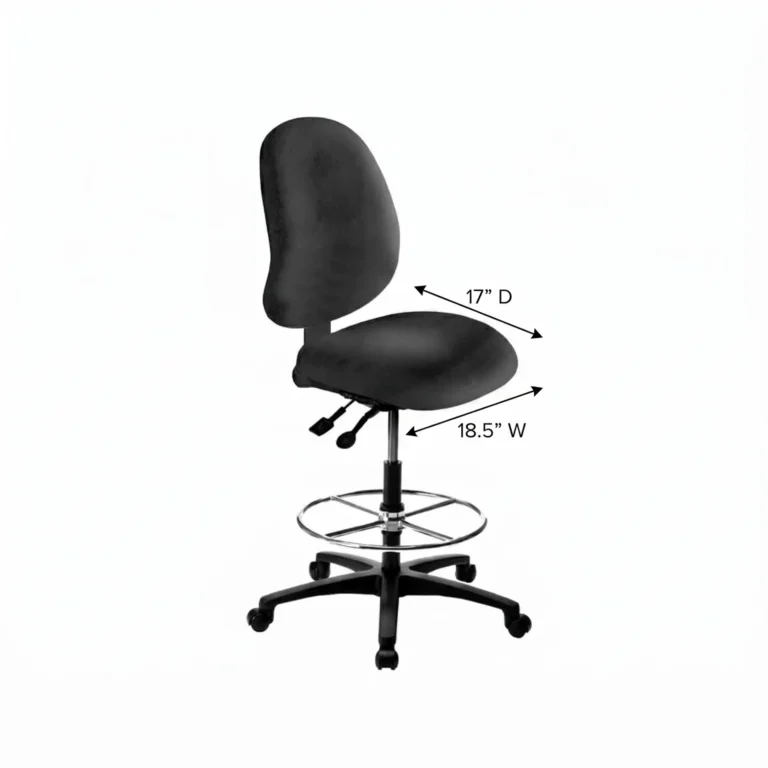
Discover how to choose the right lab stool with considerations for height, footring, and backrest to enhance comfort and productivity in your lab.
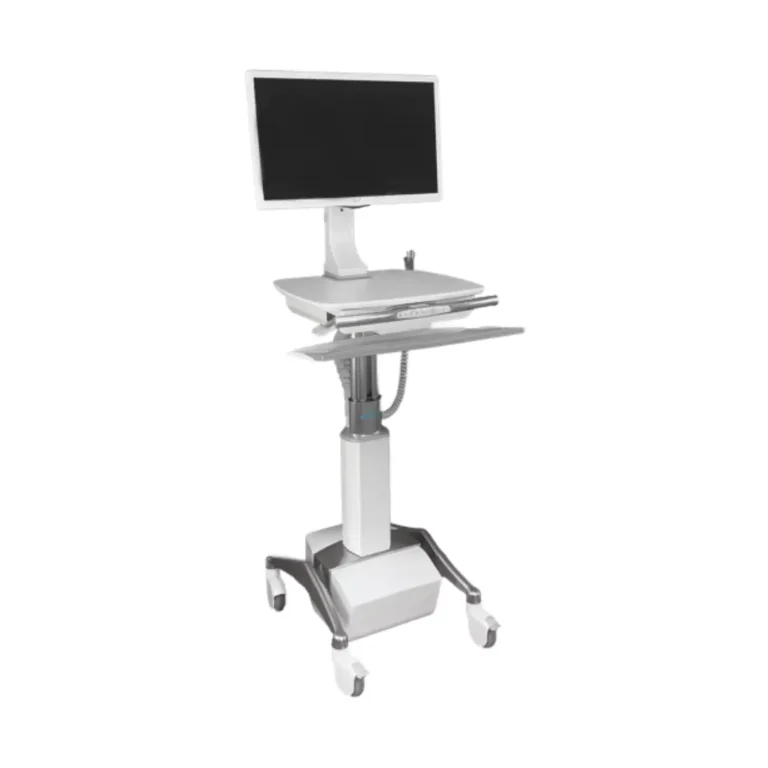
Discover how modular ergonomic furniture adapts office layouts for flexibility and hygiene, promoting social distancing and clean environments.

Choosing the right cleanroom furniture materials is essential for hygiene and compliance. Learn how material properties affect cleanroom efficiency.

The word “ergonomic” appears on countless office chairs, from inexpensive