Understanding Healthcare Ergonomics: Powered vs Non-Powered Medical Carts
The healthcare industry is constantly evolving, and with it, the tools that healthcare professionals use. One significant component of healthcare ergonomics is the medical cart, a vital piece of equipment that influences both healthcare worker efficiency and patient care quality. In this article, we delve into the nuances of powered versus non-powered medical carts, exploring how each impacts healthcare worker fatigue and efficiency within patient care settings.
Why Medical Cart Ergonomics Matter
Medical carts are integral to the delivery of patient care, serving as mobile workstations that provide access to essential tools and information. Proper ergonomic design of these carts can significantly affect the physical well-being of healthcare workers and the efficiency of patient care delivery.
Healthcare workers often navigate through tight spaces and spend long hours on their feet. An ergonomic cart design can reduce physical strain, improve workflow, and minimize the risk of musculoskeletal injuries. The choice between powered and non-powered carts plays a crucial role in these dynamics, influencing how easily a cart can be maneuvered and how well it integrates into the healthcare environment.
Features and Benefits of Powered Medical Carts
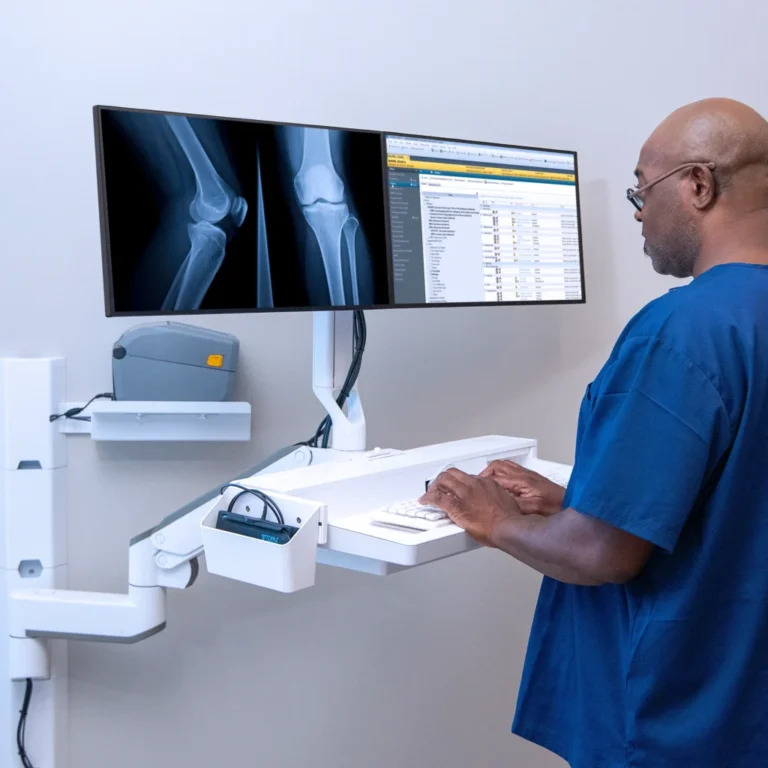
Powered medical carts are equipped with batteries and motors, providing an extra boost that aids in movement and operation. These carts often feature height-adjustable work surfaces and integrated power systems that support electronic medical records (EMR) and other digital tools.
- Mobility and Ease of Use: The motorized assistance reduces the physical effort required to move the cart, making it easier for healthcare workers to navigate hospital hallways and patient rooms.
- Integrated Power Systems: Powered carts can charge electronic devices, ensuring that healthcare workers have continuous access to patient data and digital tools without needing to return to a fixed workstation.
- Adaptability: These carts often come with customizable features, allowing for adjustments in height and accessory placement to fit different tasks and user preferences.
However, powered medical carts require regular battery maintenance and can be more expensive than their non-powered counterparts, which may be a consideration for budget-conscious healthcare facilities.
Non-Powered Medical Carts: A Simpler Alternative
Non-powered medical carts offer a straightforward solution for healthcare environments that may not require the advanced features of powered options. These carts are generally lighter, easier to maintain, and less costly.
- Lightweight Design: Without the added weight of batteries and motors, non-powered carts are generally easier to maneuver in tight spaces, which can be crucial in crowded hospital settings.
- Cost-Effective: The absence of complex power systems makes these carts a budget-friendly option for facilities that need to equip multiple departments.
- Low Maintenance: With fewer mechanical components, non-powered carts require less upkeep, reducing long-term maintenance costs and downtime.
While non-powered carts lack the dynamic features of powered models, they are ideal for tasks that require mobility without the need for continuous power supply.
Evaluating the Impact on Healthcare Worker Fatigue
The choice between powered and non-powered medical carts can significantly influence healthcare worker fatigue. Powered carts, with their motorized assistance, reduce the physical demands associated with moving heavy equipment. This can be particularly beneficial in large healthcare facilities where workers are required to travel long distances.
Studies have shown that reducing physical exertion can decrease fatigue-related errors, improving both worker satisfaction and patient safety. Non-powered carts, while more physically demanding, offer greater simplicity and ease of movement in smaller settings where power features may not be as critical.
Enhancing Efficiency in Patient Care Settings
Efficiency in patient care settings is paramount, and the right medical cart can contribute significantly to streamlined operations. Powered carts, with their integrated technology, allow for real-time data access and electronic documentation, enhancing communication and decision-making processes.
Non-powered carts, on the other hand, shine in environments where quick, direct access to supplies and equipment is necessary without the complexity of managing power systems. These carts can be easily adapted to carry a wide range of tools, supporting a versatile array of medical tasks.
Practical Considerations for Cart Selection
When selecting a medical cart, healthcare administrators should consider the specific needs of their facility:
- Facility Size and Layout: Larger facilities might benefit from powered carts for their enhanced mobility, while smaller clinics may prefer the simplicity of non-powered options.
- Workload and Staff Preferences: Consider the tasks that healthcare workers perform and their preferences for cart features, such as height adjustability and storage capacity.
- Budget and Maintenance: Evaluate the long-term costs of battery maintenance for powered carts versus the initial investment in non-powered ones.
Active Ergonomics® offers a variety of both powered and non-powered medical carts, allowing healthcare facilities to choose based on their unique operational needs.
Conclusion
In conclusion, the choice between powered and non-powered medical carts is a critical decision that affects both healthcare worker ergonomics and patient care efficiency. Each type of cart offers distinct advantages and should be selected based on the specific requirements of the healthcare environment. By understanding the benefits and limitations of each option, healthcare facilities can make informed decisions that enhance both worker satisfaction and patient outcomes. Explore Active Ergonomics®’ powered medical carts or discover our non-powered cart solutions to find the right fit for your facility’s needs.